Collection Douane & Commerce International
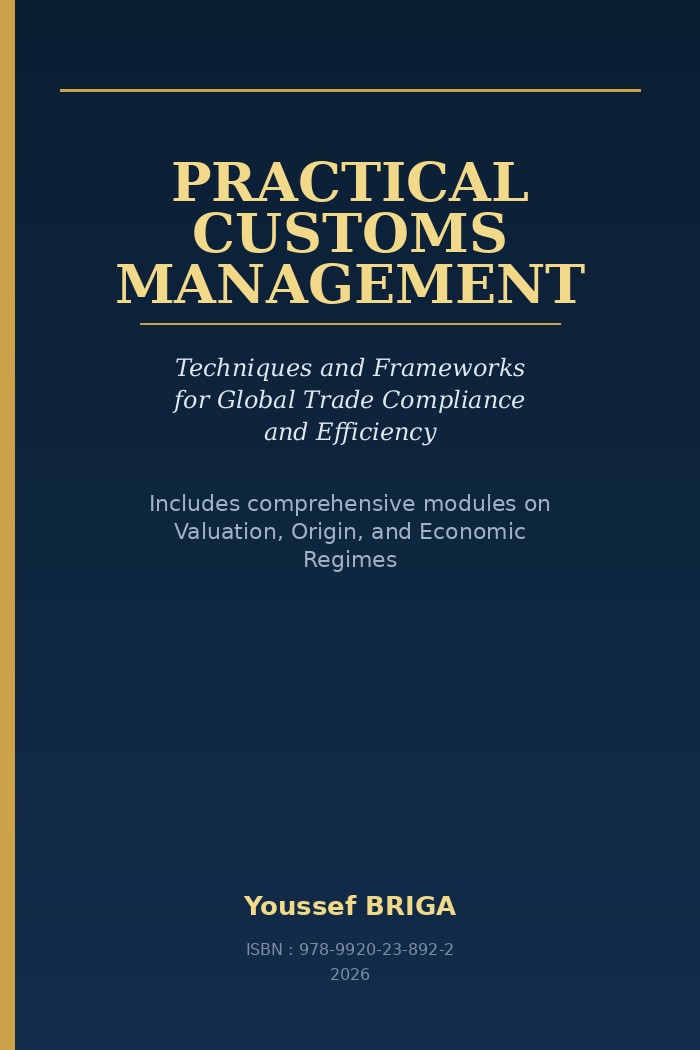
Practical Customs Management
Techniques and Frameworks for Global Trade Compliance and Efficiency
Un manuel tactique, pensé pour l'action, qui couvre l'intégralité du cycle douanier moderne : déclaration, ciblage par IA, lutte antifraude, régimes économiques, classification, origine, valeur et fiscalité.
Présentation
2026 : les politiques tarifaires agressives et la refonte de l'infrastructure commerciale américaine ont rebattu les cartes du commerce mondial. Practical Customs Management: Techniques and Frameworks for Global Trade Compliance and Efficiency n'est pas un manuel académique de plus. C'est, selon les mots de son auteur, un manuel tactique conçu pour naviguer cette ère de protectionnisme accru et de transformation numérique.
En dix chapitres denses, Youssef Briga couvre l'intégralité du cycle douanier moderne : la vélocité frontalière et les systèmes de déclaration à l'import comme à l'export, le renseignement de risque et la sélectivité pilotée par l'intelligence artificielle, la lutte contre la fraude douanière et la contrebande, l'avantage stratégique des régimes économiques suspensifs, les défis de la classification tarifaire et la maîtrise du Système Harmonisé, la détermination de l'origine et les accords de libre-échange, la défense de la valeur transactionnelle face aux audits post-dédouanement, la fiscalité douanière et la protection des recettes, jusqu'à une boîte à outils opérationnelle complète pour la conformité de bout en bout.
Ce qui distingue cet ouvrage, c'est son refus du survol. Chaque chapitre descend jusqu'au niveau opérationnel : la reconstruction forensique de la valeur déclarée, l'audit des transactions entre parties liées, le cadre des « assists », la preuve d'origine à l'épreuve du numérique, la gestion des garanties bancaires et des lettres de crédit documentaires. C'est un ouvrage pensé pour l'action, pas pour la contemplation théorique.
Il s'adresse aux directeurs douane et compliance, commissionnaires en douane, auditeurs, juristes du commerce international et responsables supply chain qui doivent, chaque jour, transformer un cadre réglementaire mouvant en décisions défendables.
Dans un contexte où une frontière mal négociée se traduit en semaines de retard et en millions de dollars de risque, Practical Customs Management donne les techniques et les cadres pour transformer la contrainte douanière en avantage opérationnel réel.
chapitres couvrant l'intégralité du cycle douanier
méthodes de valeur en douane détaillées (OMC)
contexte : protectionnisme accru et transformation numérique
Sommaire
Sommaire complet — cliquez sur un chapitre pour déplier ses sections.
Ch. 1Border Velocity: Import-Export Declaration Systems & Clearance Workflowsp. 12
- Foundations of Global Trade and Customs Frameworksp. 13
- The Sea Freight Paradigmp. 14
- The Summary Declaration & The Detailed Declarationp. 17
- Bonded Facilities and the Structural Framework of the Declarationp. 20
- Specialized Procedures & Strategic Certaintyp. 26
- Selectivity, Physical Inspection & Final Liquidationp. 35
- The Export Cycle: FOB Valuation & Account Regularizationp. 42
Ch. 2Risk Intelligence and Selectivity: AI-Driven Control & Value Reconstructionp. 49
- Strategic Control and the Logic of Selectivityp. 50
- Automated Selectivity and the Triple Channel Strategyp. 52
- Documentary Control and Inspector Mandatesp. 54
- Value Reconstruction and Forensic Integrityp. 56
- The Logic of Origin and the Post-Clearance Shieldp. 61
- Modern Traveler Controls and the Digital Borderp. 63
- AI-Driven Surveillance and Seamless Passenger Flowp. 67
Ch. 3Combating Customs Fraud: Detection Strategies & Enforcement Frameworksp. 70
- Foundations of International Trade and the Nature of Fraudp. 72
- Incentives for Fraud and the Mechanics of Smugglingp. 74
- Information Exchange & Interagency Cooperationp. 79
- Narcotics, Psychotropic Substances and Trafficking Routesp. 80
- Intellectual Property Fraud and the Counterfeit Industryp. 84
- Wildlife Trafficking (CITES) and Biosecurityp. 86
- The 2026 Enforcement Paradigm: AI, Blockchain, Task Forcesp. 92
Ch. 4The Economic Regime Advantage: Suspensive Systems for Fiscal Optimizationp. 105
- Customs Economic Regimes (CER): Promoting Competitivenessp. 106
- The Liquidation Guide: Discharging Your Customs Accountp. 109
- The Multi-Tiered Guarantee Systemp. 111
- Inward Processing Regime (IPR): Rate of Yield & Industrial Wastep. 122
- Temporary Admission (TA): Use, Equipment & Personal Mobilityp. 128
- Advance and Indirect Export Proceduresp. 135
Ch. 5Goods and Merchandises Classification Challengesp. 142
- Customs Infractions and Dispute Resolutionp. 143
- The ATA Carnet Convention: The 'Passport for Goods'p. 145
- Temporary Export for Outward Processingp. 158
- The Transit Regime: Strategic Mobility and Fiscal Suspensionp. 169
- Inward Processing and Transformation Modelp. 177
- Global Drawback Model & Digital Governancep. 180
Ch. 6The Classification Imperative: Harmonized System Mastery & Tariff Technologyp. 188
- The Global Language of Trade: The Harmonized System (HS)p. 190
- GIR 1 and GIR 2: The Judicial Core of Classificationp. 193
- Mixtures, Composites, and the Specificity Hierarchyp. 194
- Legal Notes and Structural Logicp. 196
- The Anatomy of the 10-Digit National Tariffp. 200
Ch. 7Origin Determination and Preferential Treatment: FTAs & Compliancep. 204
- The Dual Logic of Origin Determinationp. 205
- Wholly Obtained vs. Substantial Transformationp. 210
- Cumulative Origin and Total Cumulationp. 214
- Certificates of Origin and the Digital Shiftp. 221
- AI, Blockchain, and the 2030 Vision for Paperless Tradep. 226
- Audit-Proofing Proof of Originp. 231
Ch. 8Valuation Warfare: Defending Transaction Value in Post-Clearance Auditsp. 238
- The Structural Anatomy of the WTO Valuation Agreementp. 244
- The Six Methods: A Hierarchical Disciplinep. 245
- Price Actually Paid or Payable (PAPP) & Related-Party Auditsp. 253
- The 'Assists' Framework & Intangible Value: Royaltiesp. 264
- Understanding Incotermsp. 267
- Methods 4–6: Deductive, Computed & Fallback Valuep. 277
Ch. 9Duty Assessment and Revenue Protection: Taxation Structures in Global Tradep. 282
- From Royal Tolls to Global Governancep. 283
- Fiscal Sovereignty and the Economic Paradoxp. 285
- The Customs Duty Tariff and Liquidationp. 287
- Bank Guarantees & the Documentary Letter of Creditp. 291
Ch. 10Operational Compliance Toolkit: End-to-End Taxation Proceduresp. 295
- Electronic Declaration Requirements & HS Classificationp. 296
- Documentation Requirements & Duty Assessment Methodsp. 297
- Special Duty Regimes & Administrative Sanctionsp. 300
- Duty Drawbackp. 301
—Conclusion: Concluding, but not endingp. 303
- Synthèse et perspectives 2026+